Basket Empty
Compendium
Kondō Kenji
- AKA
- 近藤 憲二
- Known for
- Journalist
- Born
- Died
Biography
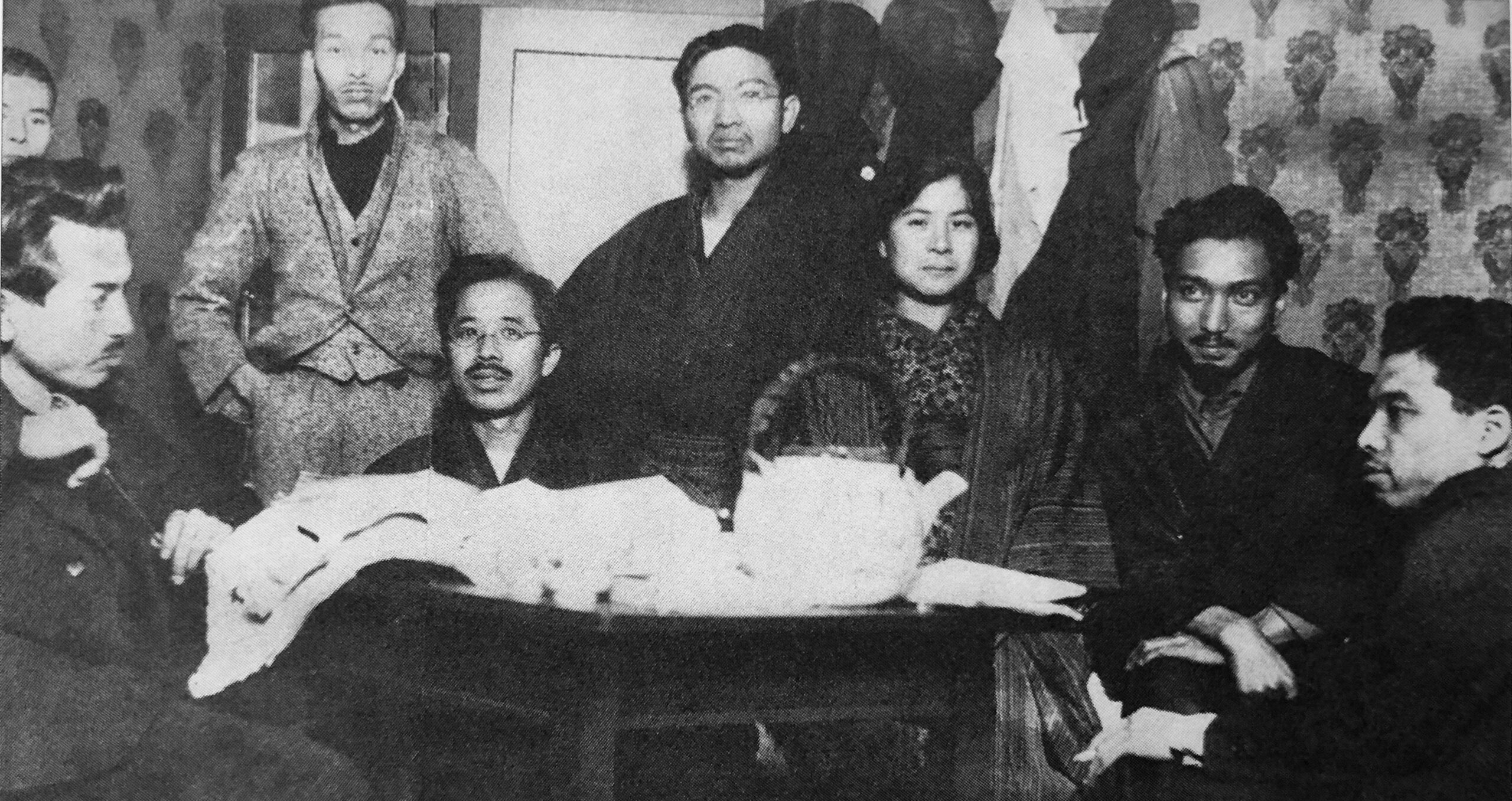
Japanese anarchist of the Taisho and Showa periods, who looked after Itō Noe (伊藤 野枝) and Ōsugi Sakae's (大杉 栄) five orphaned children following their murder on September 16, 1923 in what became known as the Amakasu Incident (甘粕事件).
In 1919, he founded with Osugi the magazine Rodo Undo (Workers’ Movement) and in December 1920 was one of the founders of the Socialist Federation and editor of his organ Shakaiguchi (Socialism). In 1921, with Eizo Kondo and Seido Takatsu he published a new series of Rodo Undo which was the result of an alliance between anarchists and communists. Sakae Osugi put an end to this alliance and from December 1921 published a third series of Rodo Undo to which Kondo, having definitively opted for anarchism, collaborated. He would now travel the country to organize study groups, meetings and strike support committees. In August 1923, he participated in the unsuccessful project of organizing a National Anarchist Federation. After the assassination by the army on 16 September 1923 of Sakae Osugi and his companion Noe Ito, he became one of the main leaders of the anarchist movement and began publishing with Kyutaro Wada, Eitaro Wada, Denjiro Muraki and Tatsuo Mizunuma a fourth series of Rodo Undo. In January 1926, he was one of the founders of the League of Black Youth (Kokishoki seinen renmei) and the publisher of the 10-volume complete works of Sakae Osugi. He was also a member of the National Free Union of Labour Unions. From January 1927, he released a new series by Rodo Undo with Tatsuo Mizunuma and Sakutaro Iwasa. After the dissolution in March 1928 of the free union of the workers’ unions, the anarchist movement broke out between a purely anarchist tendency and another anarcho-syndicalist to which Kondo adhered. He then collaborated with the Journal of Black Workers and Peasants (Kokushoku rono shimbun) and the magazine Sous le Flapeau noir (Kurihata no shitani). After the reunification in March 1934 of the anarchist movement in a new Free Union of Workers’ Unions, Kondo campaigned until all action became impossible following repression.
After World War II, Kendo participated in May 1946 in the founding of the Federation of Japanese Anarchists (Nihon anakisuto renmei) which in 1951 became anarchist federation before resuming its first name in 1955. He campaigned there until the winter of 1957 when, when, when he fell seriously ill, he ceased all activities and wrote his memories. Kenji Kondo died on 6 August 1969.
Archive
Gallery