Basket Empty
Compendium
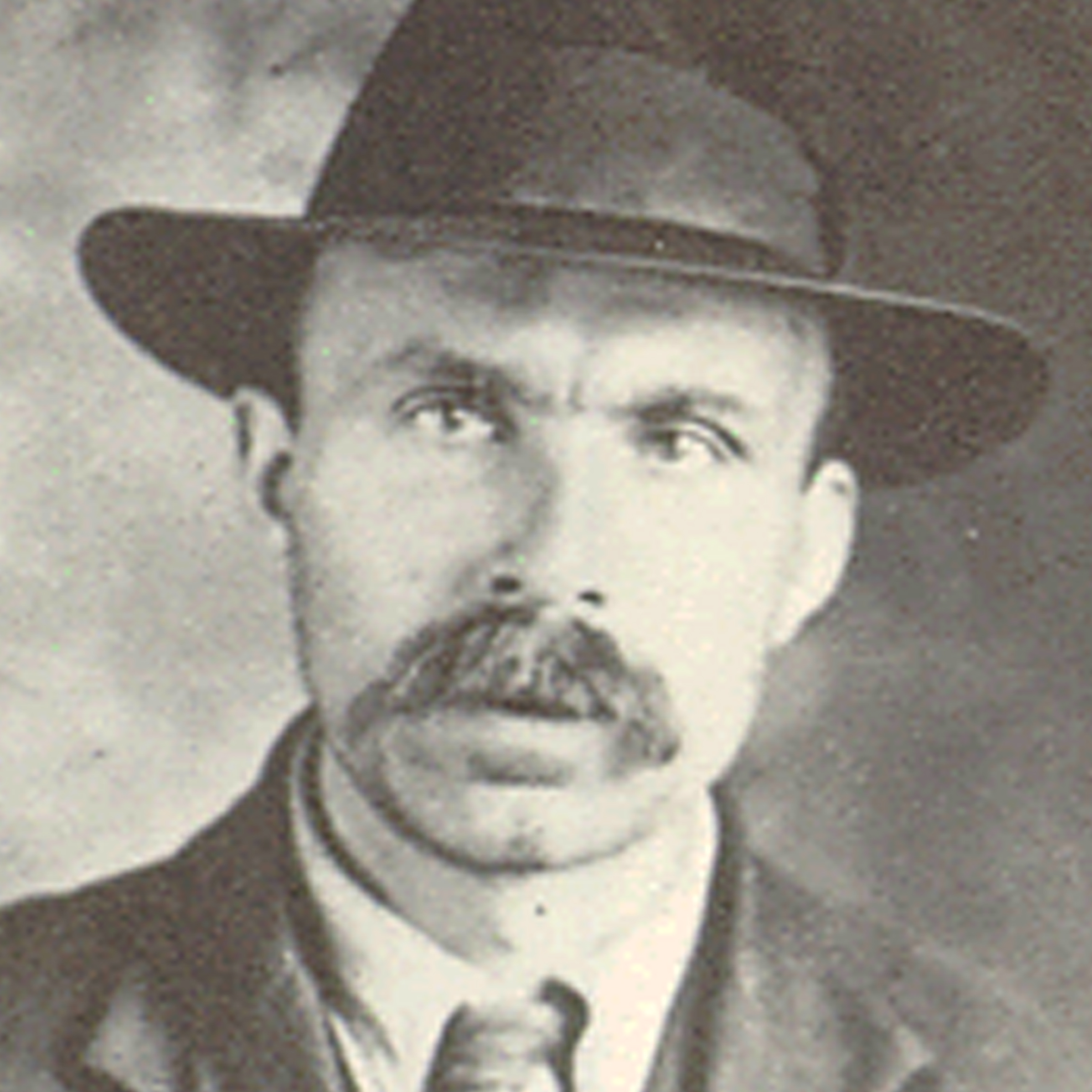
Bartolomeo Vanzetti
- Known for
- Prisoner
- Born
- Died
Biography
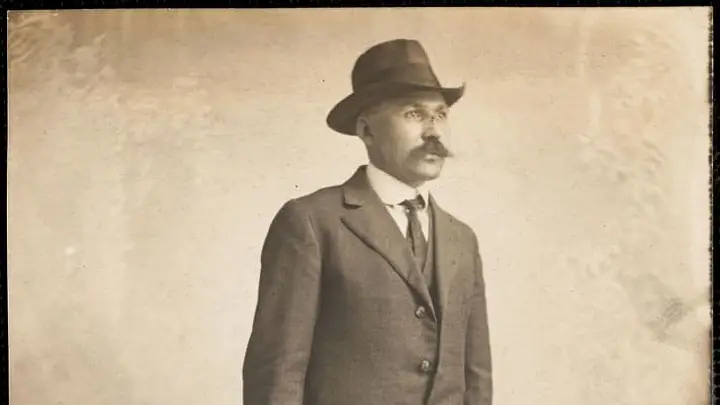
Bartolomeo Vanzetti was born on June 11, 1888, in Villafalletto, in the province of Cuneo, Piedmont, Italy, to G. Battista Vanzetti and Giovanna Vanzetti. He grew up in an agricultural community and attended local schools until he was thirteen. Vanzetti enjoyed studying and performed well in school, but his father eventually decided that he should learn a trade rather than continue his education. In 1901, Vanzetti was sent to work in a pastry shop in Cuneo. He later worked in a bakery in Cavour, where he spent several years under demanding conditions. His working days were extremely long, and he disliked the trade but continued because he wanted to please his father.
In 1907, Vanzetti became seriously ill while working in Turin and returned to his family home. His recovery gave him a period of relative happiness, during which he helped cultivate his family's garden and enjoyed being close to his mother. This period ended when his mother became gravely ill. Vanzetti remained at her bedside throughout her final illness and was deeply affected by her death. Her loss left him withdrawn and despairing, and he eventually decided to leave Italy. On June 9, 1908, he departed for the United States.
Vanzetti arrived in New York after traveling through France and spending more than a week at sea. He arrived with little money and no secure place to live. His first experiences in America were difficult. He worked as a dishwasher and later at the Mouquin Restaurant, where he described extremely hot, unsanitary conditions, very long hours, poor food, and low wages. After leaving the restaurant because he feared for his health, he spent months searching unsuccessfully for work. He and another unemployed immigrant eventually traveled through Connecticut looking for employment and at times went hungry and slept in abandoned buildings.
Eventually, Vanzetti found work at brick furnaces near Springfield, Massachusetts, where he remained for ten months. He subsequently spent two years working in the stone pits at Meriden, Connecticut. These experiences profoundly influenced his understanding of poverty and working-class life. He came to sympathize with workers who were forced to accept extremely low wages simply to survive. He increasingly believed that class divisions were a fundamental feature of society and began developing a strong commitment to social equality.
Vanzetti returned to New York and worked as a pastry chef, but he was repeatedly dismissed from his jobs. He eventually returned to manual labor, working on railroad construction and in factories around Worcester, Massachusetts. He later settled in Plymouth, where he worked in several industries, including the Stone establishment and the Cordage Company. His involvement in the Plymouth cordage strike and his increasing participation as a speaker in working-class organizations made it difficult for him to find employment. According to his autobiography, some factories blacklisted him, although he maintained that his employers regarded him as an industrious and dependable worker.
As his health deteriorated after years of hard labor and unemployment, Vanzetti sought a more independent means of earning a living. In 1919, he purchased a cart and equipment from a friend and began selling fish. He continued to work at various temporary jobs when his fish business was insufficient, including cutting ice, shoveling coal, digging ditches, clearing snow, and working on water-main construction. He also dug clams when other employment was unavailable. During this period, he was increasingly interested in returning to Italy to see his family.
Vanzetti's intellectual development accompanied his working life. As a young man in Italy, he had read works by writers such as Edmondo De Amicis, Saint Augustine, and Dante. In the United States, despite working long hours under difficult conditions, he continued to educate himself. He read Peter Kropotkin, Maxim Gorky, Marx, Malatesta, Reclus, Mazzini, and other political and social writers. He also studied history, religion, science, literature, and philosophy. He described spending many nights reading by a flickering gas light before returning to hard labor the following morning.
These experiences shaped Vanzetti's political and moral beliefs. He came to reject the idea that individuals should pursue their interests without regard for others. Instead, he advocated fraternity, equality, universal love, and social justice. He believed that the poor and oppressed deserved particular sympathy and argued that human happiness depended upon conditions such as health, peace of conscience, education, and freedom. By the end of his autobiography, he explicitly identified himself as an anarchist-communist, stating that he believed communism was the most humane form of social organization and that liberty was essential to human development.
On April 15, 1920, at 3 p.m., a group of four or five men shot down Alexander Berardelli and Frederick A. Parmenter who were carrying the payroll of Slater and Morrill, at a point in front of the Rice & Hutchins factory. The attacking party then escaped by automobile.
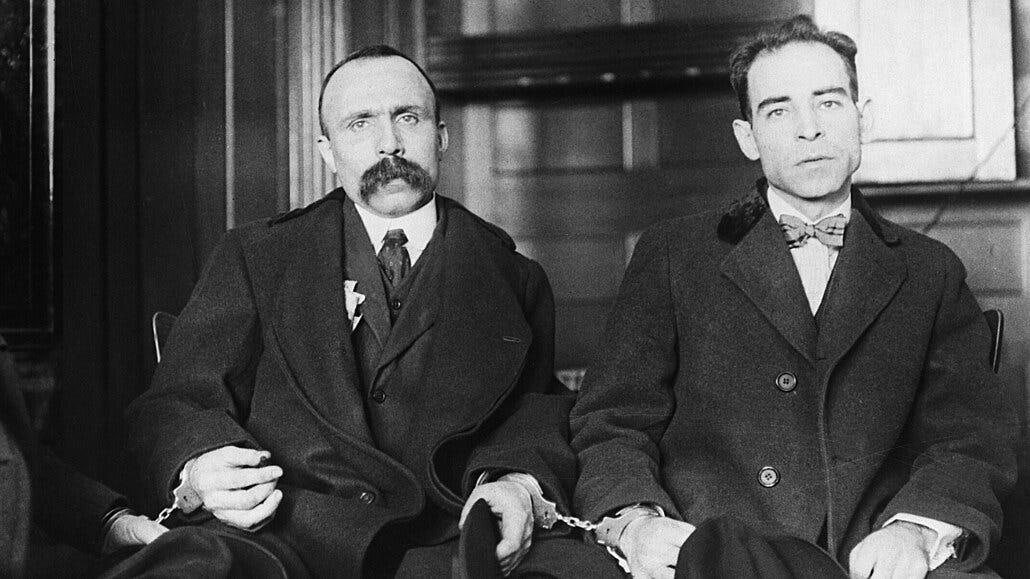
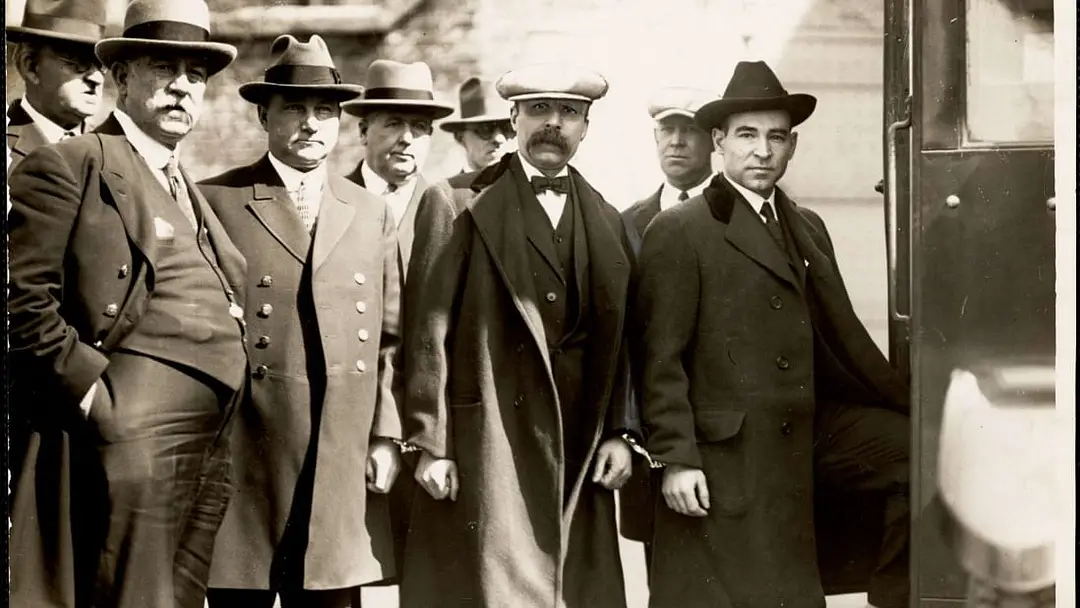
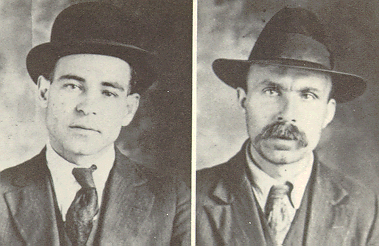
On May 5, 1920, Nicola Sacco and Bartolomeo Vanzetti were arrested at Brockton, Mass. Vanzetti initially believed the arrest was connected to immigration and deportation proceedings. Instead, h0e was convicted in a separate Bridgewater robbery case. The judge for this case, Webster Thayer, was openly hostile to foreigners and had made speeches opposed to anarchism. After an eleven-day trial and sentenced to twelve-fifteen years in prison, despite sixteen people testifying that they had bought eels from Vanzetti during the time from of the Robbery.
The same judge, later presided over the murder trial involving Vanzetti and Sacco.
On July 14th, 1921.They were convicted of first degree murder. Over the next few years, they would fight on the legal front for a fair trial. Both wrote dozens of letters asserting their innocence, insisting they had been framed because they were anarchists. To no avail.
On April 9, 1927, death sentences were imposed.
On August 23, 1927, Nicola Sacco and Bartolomeo Vanzetti were executed via electric chair at the Massachusetts State Prison in Charlestown, near Boston.
Quote
I championed the weak, the poor, the oppressed, the simple and the persecuted.
Archive
Gallery