Basket Empty
Compendium
Colin Ward
- Known for
- Writer and historian
- Born
- Died
Biography
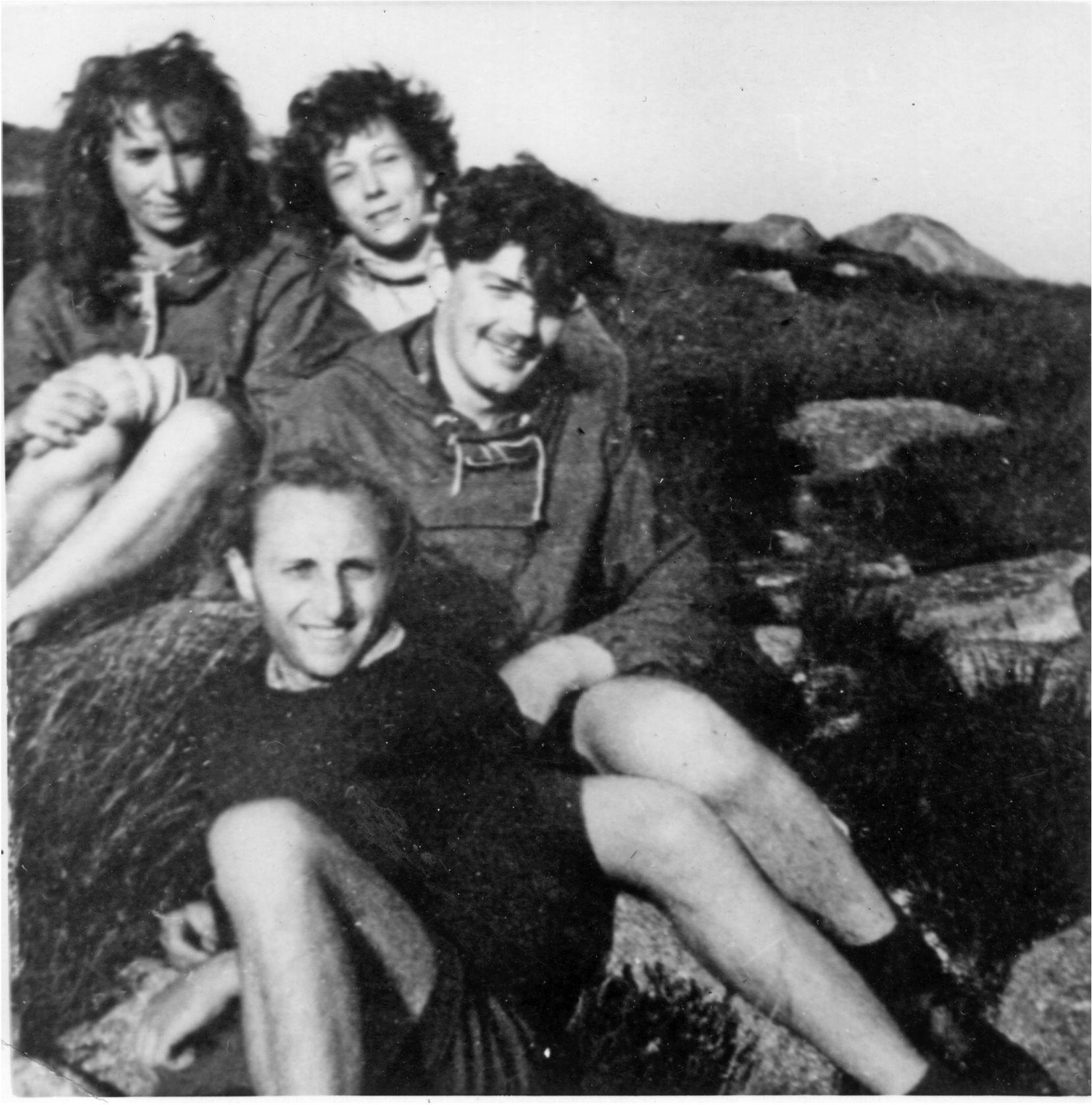
Born in Wanstead, Essex in August 1924. After leaving school at fifteen, Ward worked as an architect’s draughtsmen until he was conscripted in 1942. This would prove a critical moment in Colin’s life as during his time with the British Army in World War Two, he became an anarchist. Infamously, a subscription to War Commentary led to Ward giving evidence in a trial of its three editors, who were eventually sentenced to nine months in prison on grounds of endorsing disaffection. After the war, Colin Ward began to write regularly for journals, with much of his early journalism focusing on the squatters’ movement. He subsequently became editor of Freedom, the British anarchist newspaper (1947-1960), eventually founding Anarchy and serving as its editor between 1961 and 1970. In 1973, Ward culminated his ideas and political thought in Anarchy in Action. Here, inspired by anarchists Peter Kropotkin and Gustav Landauer (see Baldwin, 1970; Esper, 1961).
For Colin, conceptions of ‘anarchy in action’ manifest themselves most clearly in the built environment. Inspired by his architectural training, he was interested in how ‘ordinary people’ self-motivated and self-designed spaces and communities. Colin continued as an architect in the late 1950s and 60s, and by the 1970s he was appointed Education Officer for the Town and Country Planning Association. These roles inspired Ward to publish about the relationships between architecture, planning and education. Most famously, The Child in the City (1978) explored the way in which children make creative use of urban environments. As Ward’s anarchist beliefs were rooted in everyday relationships and experiences, he also channelled these values into social histories of the quotidian practices of organisations, stressing the value of co-operation. For example, he praised organisations such as the RNLI, housing associations and worker’s co-operatives. This focus on the voluntary sector, and his belief in the everyday ways that individuals can galvanise social change through direct action, led to Ward being described as a ‘gentle’ anarchist proposing a ‘grassroots’ revolution. His later writings included social histories of holiday camps (1986, with Dennis Hardy) and allotment gardens (1988, with David Crouch), with the theme of ‘self-made’ communities most strongly communicated in Arcadia for All (1984, with Dennis Hardy). As well as ideas of self-organisation, Colin Ward was also interested in the potential of mutual aid. For example, writing in an introduction to Peter Kropotkin’s Fields, Factories and Workshops Tomorrow (1975), a book which Ward also edited and contributed to, he spoke of how ideas of self-sufficiency and mutual aid were relevant for the current economic and energy crises.
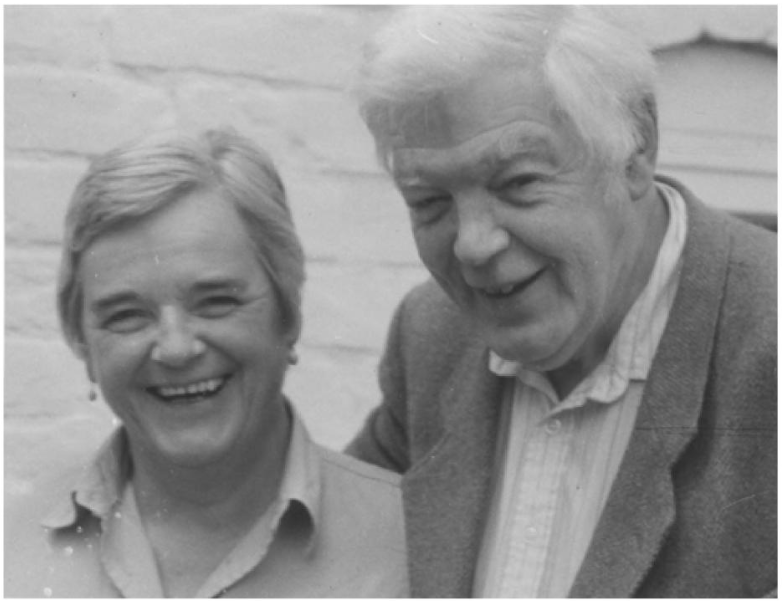
Colin Ward is quoted as saying that “all my books hang together as an exploration of the relations between people and their environment” (Worpole, 1999: 12) and this can be seen right through into his final publications, most powerfully in Cotters and Squatters (2002) – an examination of the rural poor that connects ideas of housing, architecture and everyday use of space. Indeed, it has been Ward’s focus on people’s relationships with their environments that gets to the heart of his writings, political beliefs and legacy. This perhaps ‘quiet’ or ‘banal’ aspect of study could easily be overlooked or dismissed, particularly when compared to other anarchist writings and ideology. However, it is the real connection to the experiences of everyday life that makes Ward’s contribution so powerful, relevant and timeless. Colin Ward died on 11th February 2010 aged eighty-five, survived by his wife Harriet, whom he married in 1966, and their children.
One of Colin Ward’s greatest contributions was his focus on childhood and the built environment. This interest first appears in a chapter of Anarchy in Action (1973) – ‘Schools No Longer’ – where Ward discusses the genealogy of education and schooling, in particular examining the writings of Everett Reimer and Ivan Illich, and the beliefs of anarchist educator Paul Goodman. Many of Colin’s writings in the 1970s, in particular Streetwork: The Exploding School (1973, with Anthony Fyson), focused on learning practices and spaces outside of the school building. In introducing Streetwork, Ward writes, “[this] is a book about ideas: ideas of the environment as the educational resource, ideas of the enquiring school, the school without walls…” (1973: vii). In the same year, Ward contributed to Education Without Schools (edited by Peter Buckman) discussing ‘the role of the state’. He argued that “one significant role of the state in the national education systems of the world is to perpetuate social and economic injustice” (1973: 42). Here, we can again see the inter-relatedness between Ward’s own experiences, politics and writings. Ken Worpole, fellow writer and collaborator, reflects on this period of Colin’s work, which also included the initiation of a Bulletin of Environmental Education through the Town and Country Planning Association.
In The Child in the City (1978),and later The Child in the Country (1988), Ward examined the everyday spaces of young people’s lives and how they can negotiate and re-articulate the various environments they inhabit. In his earlier text, the more famous of the two, Colin Ward explores the creativity and uniqueness of children and how they cultivate ‘the art of making the city work’. He argued that through play, appropriation and imagination, children can counter adult-based intentions and interpretations of the built environment. His later text, The Child in the Country, inspired a number of social scientists, notably geographer Chris Philo (1992), to call for more attention to be paid to young people as a ‘hidden’ and marginalised group in society. Ward, however, was keen to stress the individuality of children and their educational needs, quoting cultural anthropologist Margaret Mead that “it’s a good thing to think about the child as long as you remember that the child doesn’t exist, only children exist, every time we lump them together, we lose something.” (1978: vi) Ward was also an educator himself as a teacher of Liberal Studies at Wandsworth Technical College in South London during the 1960s. This grassroots experience of education, including his work as an Education Officer, gave Ward’s writing an authoritative and yet sympathetic edge. This quality, combined with his passionate and long-held concern with the politics of place, makes Colin Ward an inspirational key thinker.
Quote
<p>The state is not something which can be destroyed by a revolution, but is a condition, a certain relationship between human beings, a mode of human behaviour; we destroy it by contracting other relationships, by behaving differently.</p>
Archive
Gallery