Basket Empty
Compendium
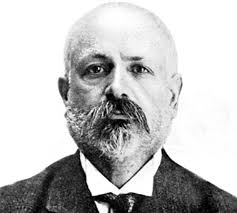
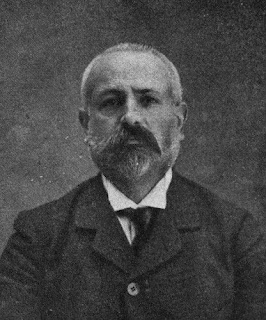
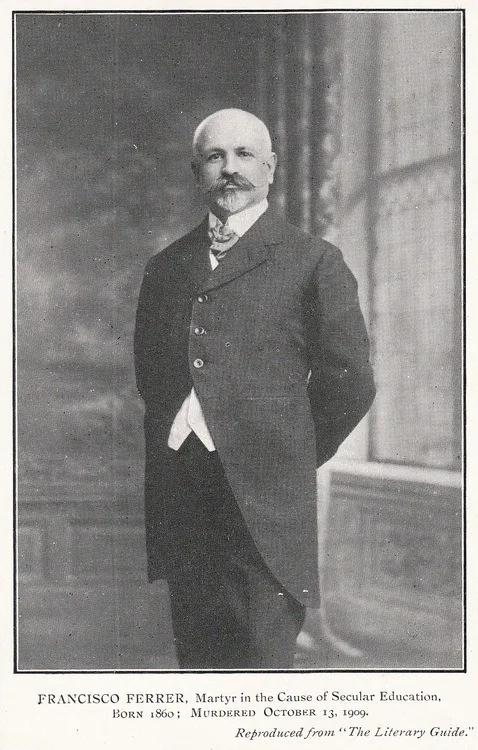
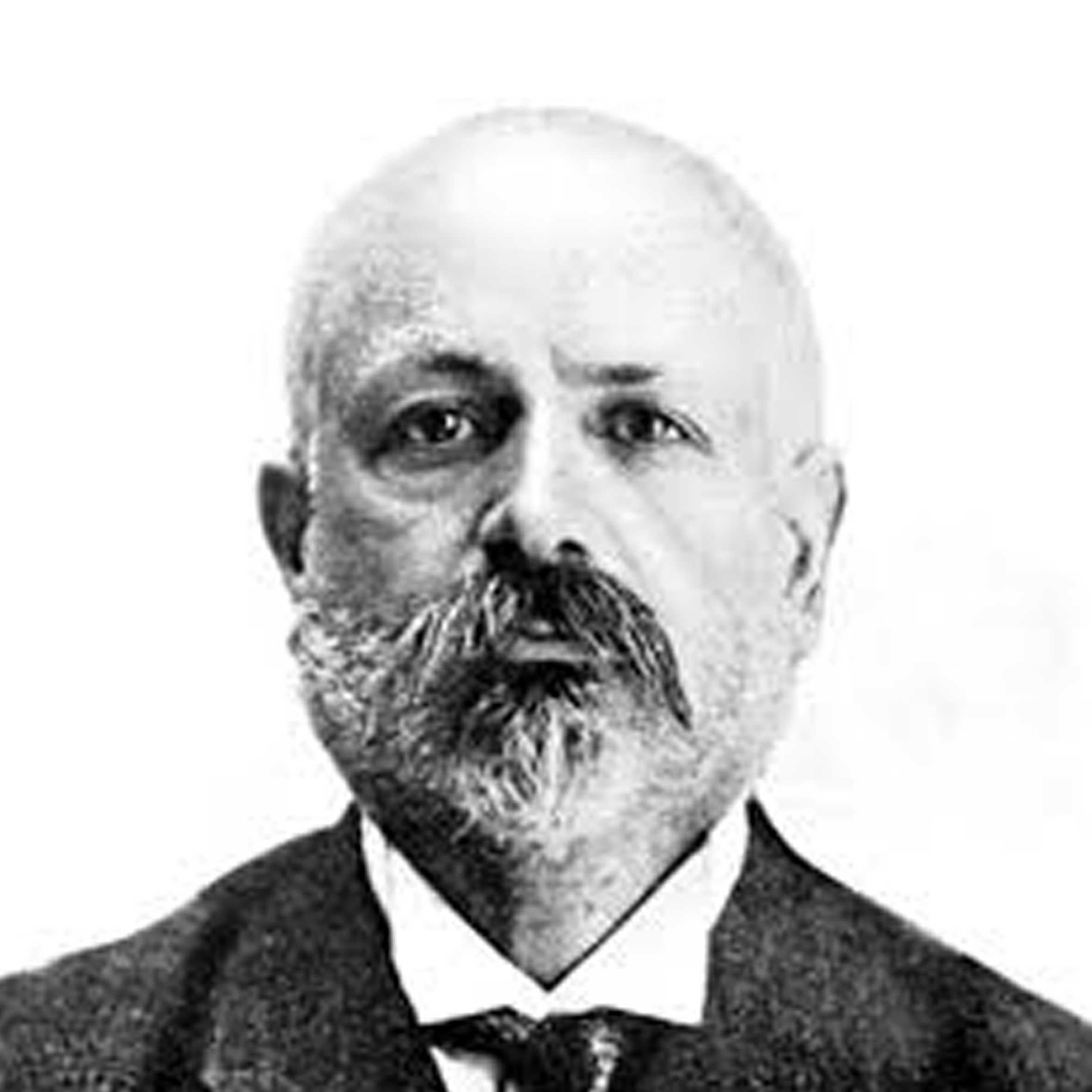
Francisco Ferrer
- Known for
- Educator
- Born
- Died
Biography
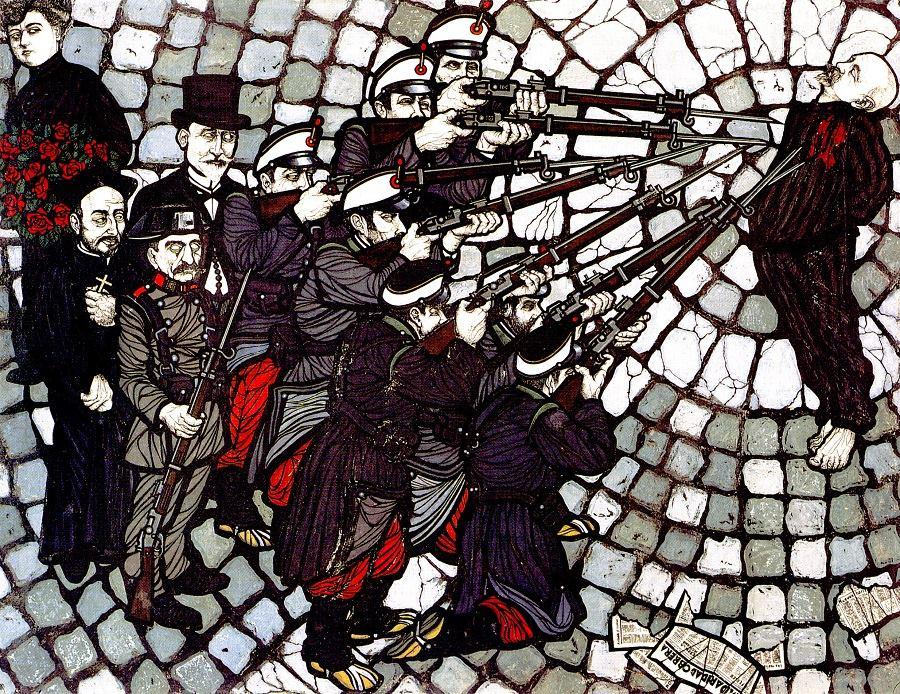
Spanish anarchist and teacher, is captured after hiding for five weeks in caves on his farm. He was executed without trial by firing squad at Montjuich Fortress in Barcelona on 13 October.
Spanish educator, free-thinker, anarchist sympathiser, and one of the most influential advocates of rationalist and libertarian education in the early twentieth century. Born on 10 or 14 January 1859—sources differ—at Alella, near Barcelona, he was the thirteenth of fourteen children in a conservative Catholic farming family. His formal education was limited and strongly religious, an experience that later contributed to his opposition to clerical control of education. At fourteen he left home to work for a textile merchant near Barcelona, where he encountered republican, anticlerical, and freethinking ideas that profoundly shaped his political development.
Ferrer became involved in republican politics and Freemasonry and developed close relationships with figures in Barcelona's radical and libertarian circles. He joined the Verdad Masonic lodge and became acquainted with Anselmo Lorenzo, an important figure in the Spanish anarchist movement. Ferrer initially supported progressive republicanism, but his dissatisfaction with conventional republican politics gradually pushed him toward more radical positions. In the early 1880s he was associated, though controversially, with republican insurrectionary activity. Following the failure of an attempted uprising in 1884, he eventually left Spain and settled in France in 1886.
His fifteen years in France were decisive. Ferrer supported himself through various occupations while becoming increasingly interested in education, secularism, and social reform. He grew critical not only of the Spanish political establishment but also of French republican education, which he believed remained too authoritarian and insufficiently emancipatory. His thinking moved toward a libertarian conception of education in which children would be encouraged to develop independence, rational judgment, cooperation, and opposition to social inequality.
In 1901 Ferrer returned to Barcelona and founded the Escuela Moderna, or Modern School. Financed in part by an inheritance from Ernestine Meunier, a former pupil and associate in France, the school represented his central educational experiment. Ferrer rejected the traditional model based on religious instruction, punishment, rote learning, and unquestioned authority. Instead, he promoted rational and scientific education, secularism, coeducation of boys and girls, social equality, autonomy, and mutual aid. He also sought to make education accessible to working-class children.
The Modern School quickly became more than a single institution. Ferrer established a publishing operation and produced educational materials and periodicals intended to disseminate rationalist ideas. By 1907, more than one hundred schools and related initiatives in Spain had been influenced by the movement. His educational model subsequently inspired Modern Schools in Europe, the Americas, and particularly the United States.
Ferrer nevertheless faced persistent hostility from conservative and Catholic authorities. In 1906, Mateo Morral, a former librarian associated with the Modern School, attempted to assassinate King Alfonso XIII. Although Ferrer was not established as the organiser of the attempt, he was arrested along with other radicals and accused of conspiracy. The Modern School was closed, and Ferrer spent more than a year in prison before being acquitted for lack of evidence. He was released in 1907, but authorities prevented him from reopening the school. He subsequently continued his educational work through publishing and helped promote international cooperation among advocates of rationalist education.
The final and most controversial episode of Ferrer's life came during the Tragic Week of Barcelona in July 1909. The unrest began amid opposition to military mobilisation for the colonial war in Morocco and developed into a general strike, riots, and attacks on religious institutions. Ferrer was arrested on 31 August and accused by the authorities of being one of the principal instigators of the uprising. Historians have generally rejected the claim that he organised the revolt; evidence connecting him to its planning was weak, and his military trial was widely regarded as fundamentally unjust.
On 9 October 1909, a military court sentenced Ferrer to death. Four days later, on 13 October, he was executed by firing squad at Montjuïc Fortress in Barcelona. His death provoked widespread international protests, with critics portraying the trial and execution as political repression directed against a dangerous opponent of the established order. His execution transformed him into an international martyr for free thought and libertarian education.
Ferrer left behind a substantial educational legacy despite the brief existence of his original school. His writings, publishing activities, and philosophy helped establish an international movement of Modern Schools dedicated to secular, rational, non-authoritarian education. Although many of these schools were short-lived, Ferrer's ideas influenced later educational experiments and libertarian pedagogical movements. In Spain, his reputation remained politically controversial for decades, but after the fall of Franco's dictatorship his memory was officially rehabilitated. Today, Ferrer is remembered principally as an advocate of education as a means of developing intellectual independence, challenging clerical authority, and promoting social emancipation.
Archive
Gallery