Basket Empty
Compendium
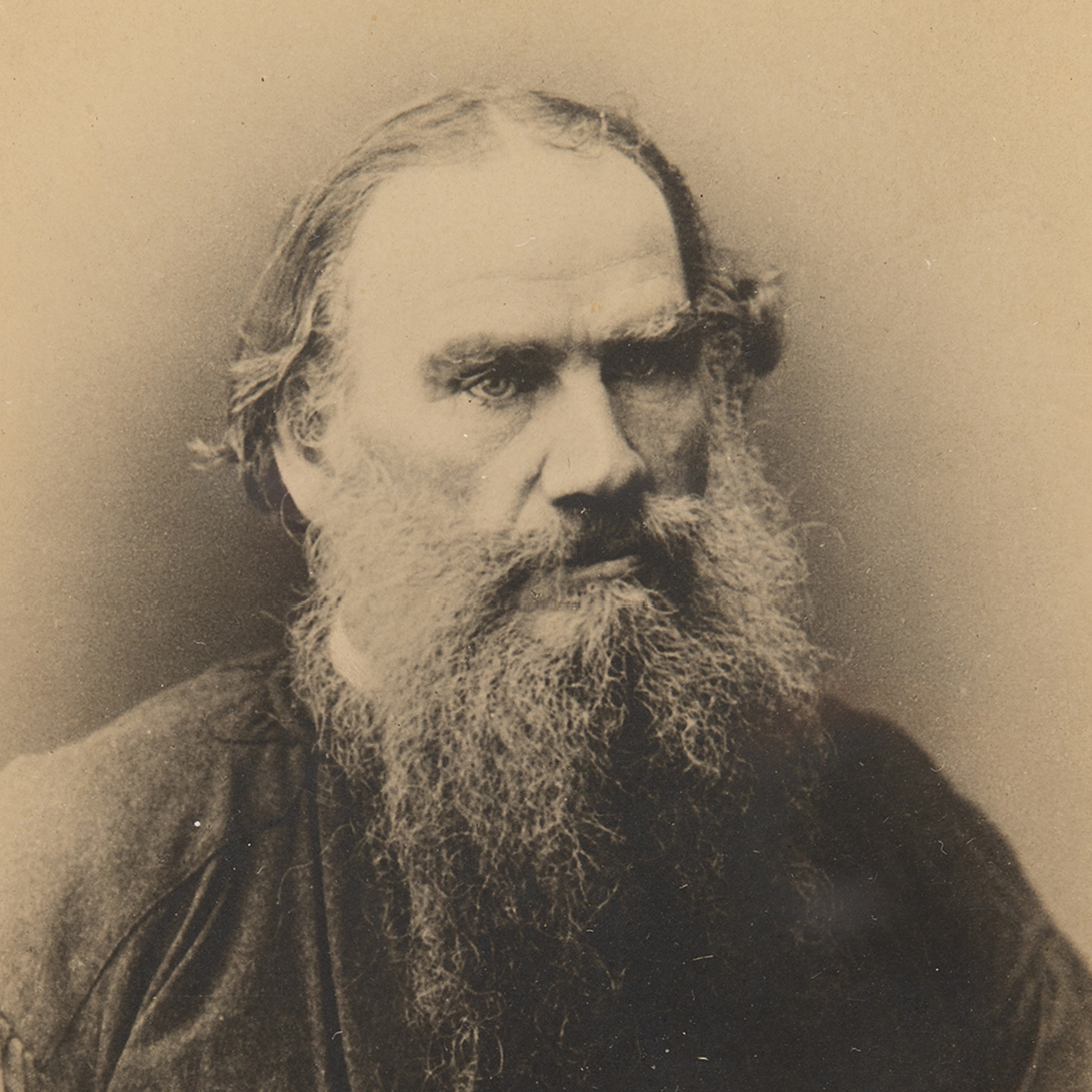
Leo Tolstoy
- AKA
- Count Lev Nikolayevich Tolstoy
- Known for
- Writer
- Born
- Died
Biography
Famed Russian novelist, religious pacifist and anarchist.
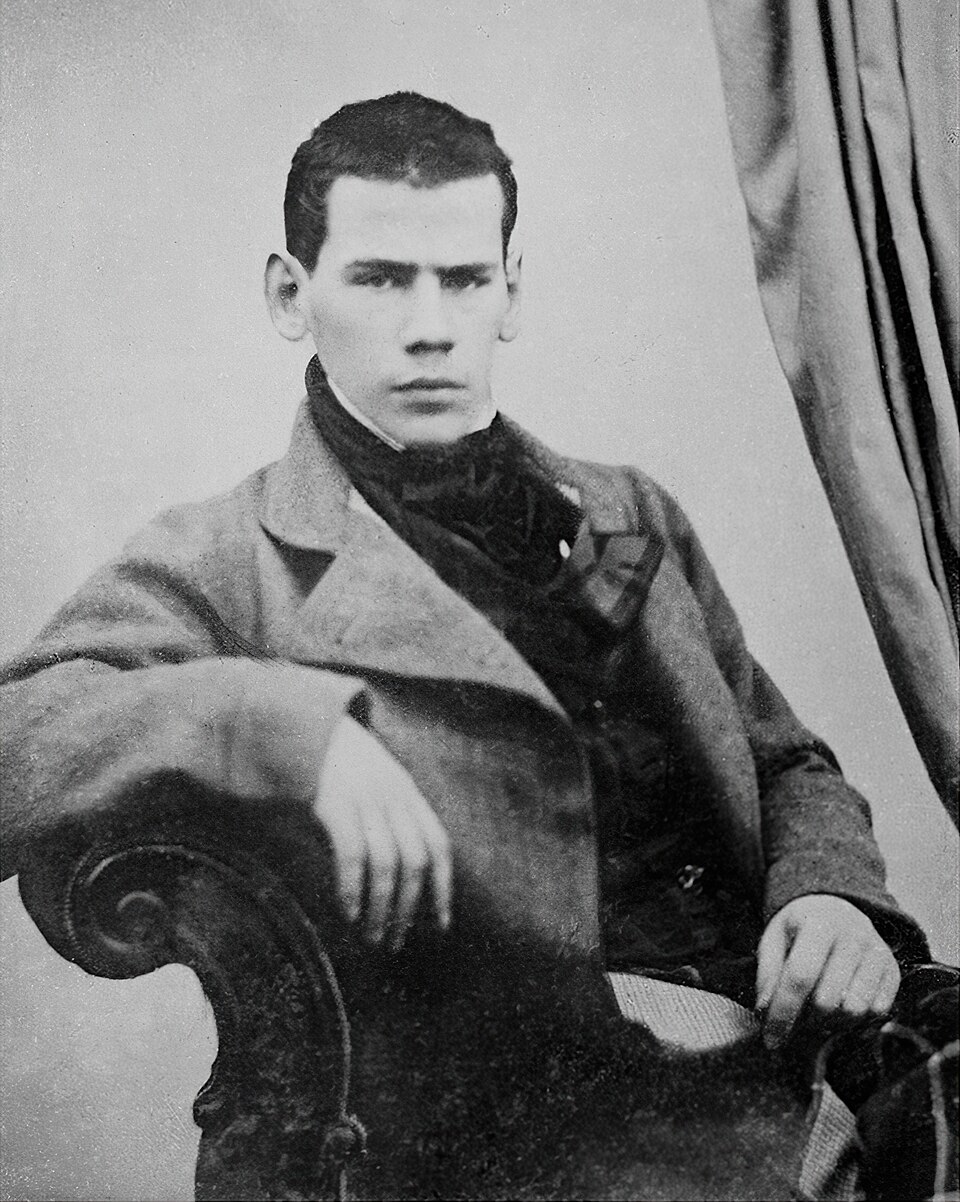
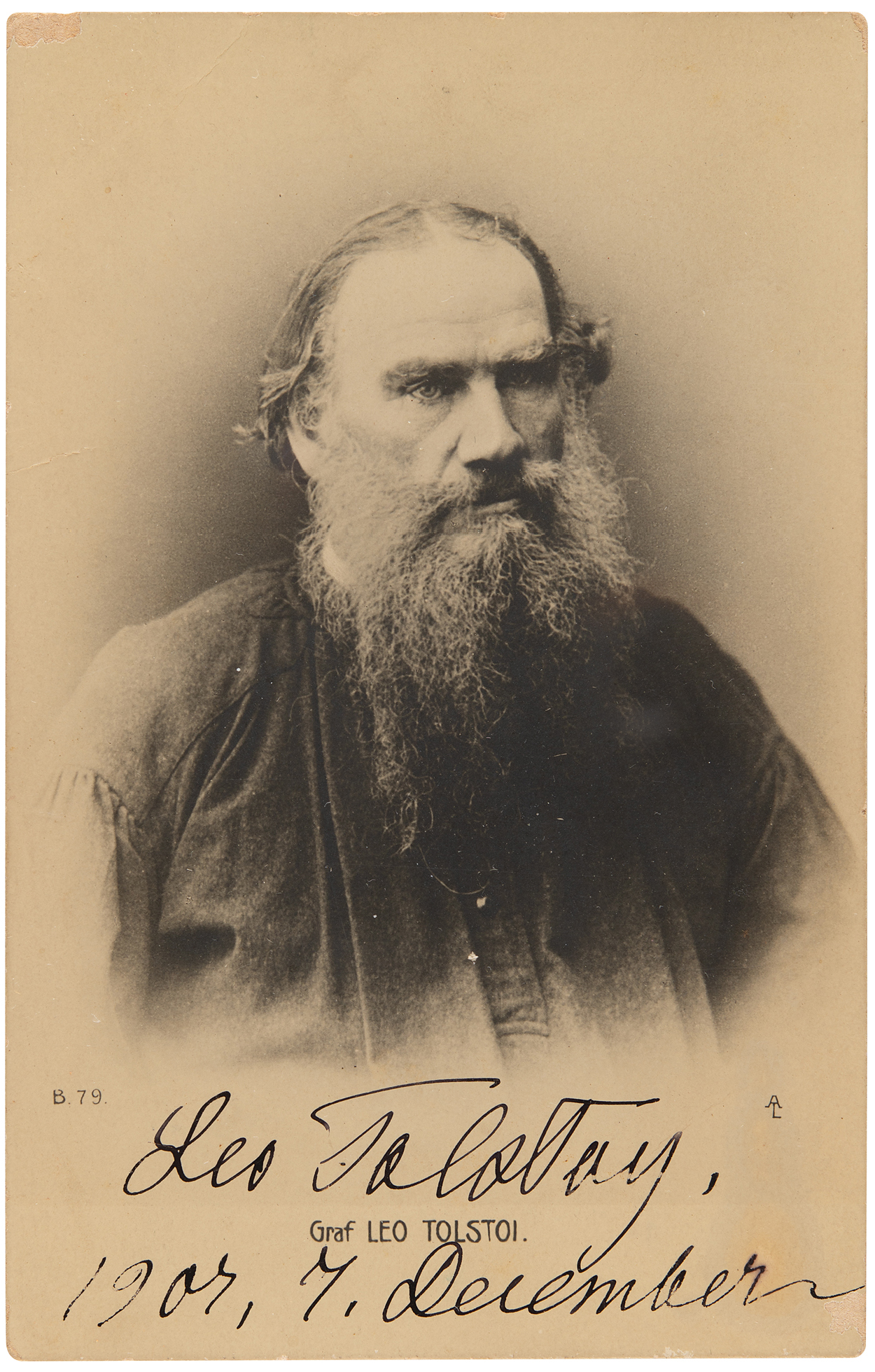
Count Lev Nikolayevich Tolstoy, better known as Leo Tolstoy, was born on 9 September 1828 at Yasnaya Polyana, his family estate in the Russian Empire. He became one of the greatest novelists in world literature, celebrated for works such as War and Peace and Anna Karenina. Yet the later Tolstoy was more than a novelist. He became a radical moral and religious thinker whose criticism of the state, private property, organised religion, social inequality, and violence led him toward a distinctive form of Christian anarchism and absolute non-violence. His ideas influenced political and religious reformers around the world, most notably Mahatma Gandhi.Born into the Russian aristocracy and experienced the privileges of that class from an early age. He attended Kazan University but did not complete his studies. As a young man, he entered the Russian army and served during the Crimean War. His experiences as a soldier and his observations of warfare later became important to his rejection of violence. In his early adulthood, Tolstoy lived a turbulent life marked by gambling, sexual relationships, ambition, and a desire for social recognition. His later religious and philosophical transformation was partly a reaction against this earlier way of life.
His literary career established him as a central figure in nineteenth-century Russian culture. War and Peace portrayed the lives of individuals against the enormous forces of war, politics, and history, while Anna Karenina examined love, family, morality, and social conventions. Although these novels are not political treatises, they contain many of the ideas that would become central to Tolstoy's later thought. He was deeply interested in ordinary human beings, the rhythms of rural life, the moral consequences of social institutions, and the difference between genuine human experience and artificial social conventions. A profound spiritual crisis in the 1870s led Tolstoy to reconsider the purpose of life. He became increasingly dissatisfied with wealth, fame, aristocratic privilege, and conventional Christianity. In A Confession, he described his struggle with the question of whether life had any meaning in the face of death. He eventually found an answer in a radical interpretation of the teachings of Jesus, particularly the Sermon on the Mount.
Tolstoy's religious beliefs formed the foundation of his anarchism (often described as Christian anarchism), not a programme for violent revolution, instead, he argued that the state depended fundamentally upon coercion and violence. Governments maintained their authority through armies, police, prisons, courts, taxation, and laws backed by force. Tolstoy therefore questioned the moral legitimacy of political authority itself. He believed that people should follow the moral law expressed in the teachings of Christ rather than obey institutions when those institutions demanded actions contrary to conscience. For Tolstoy, the command to love one's neighbour was incompatible with participation in systems based on violence and domination. He developed these arguments most extensively in works such as The Kingdom of God Is Within You and The Slavery of Our Time. Tolstoy argued that modern society disguised coercion behind political institutions and economic arrangements. Ordinary people, he believed, were encouraged to accept injustice because they were taught that obedience to the state was necessary for social order.
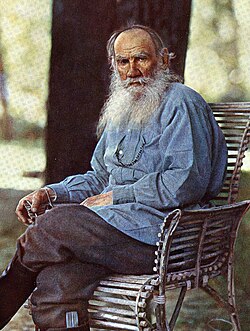
Tolstoy's anarchism was therefore closely connected with his criticism of private property and economic inequality. Having been born into the landowning aristocracy, he became increasingly uncomfortable with possessing enormous amounts of wealth while peasants lived in poverty. He advocated a simpler way of life and attempted to reduce the distance between himself and the peasants who worked on or around his estate. He engaged in manual labour, dressed more simply, and attempted to live according to the moral principles he advocated.
This concern with ordinary life also connects Tolstoy's philosophy with what can be called naturalism. Tolstoy rejected the artificial values of aristocratic and urban society and placed great importance on direct experience, nature, physical labour, and the rhythms of rural life. For him, a morally meaningful existence was not found primarily in wealth, luxury, political power, or intellectual sophistication. It was found in work, human relationships, simplicity, and a close relationship with the natural world. Tolstoy's understanding of nature was not merely aesthetic. Nature represented a form of life that existed independently of the artificial hierarchies constructed by human societies. Peasant life, despite its hardships, appeared to him to preserve forms of cooperation, simplicity, and connection with the earth that were increasingly lost among privileged classes. His admiration for rural life was therefore part of a larger moral critique of industrial civilisation.
At the centre of Tolstoy's philosophy was his commitment to non-violence. He interpreted Christ's teaching, particularly the instruction to resist not evil by force, as a literal moral principle. Violence could not ultimately create a moral society because it reproduced the very domination that reformers claimed to oppose. This led Tolstoy to reject war completely. Having witnessed warfare himself, he regarded the glorification of military courage as morally dangerous. Soldiers might be praised for patriotism and bravery, but Tolstoy argued that the essential act required by war was the killing of another human being. He therefore rejected the idea that national interests could justify violence. His non-violence extended beyond war. Tolstoy opposed capital punishment, physical punishment, revolutionary violence, and coercive political reform. He believed that social change should begin with individuals refusing to participate in injustice. Instead of attempting to seize the machinery of government, people should withdraw their cooperation from institutions they considered immoral. This idea became known as non-resistance to evil by violence. Tolstoy did not mean that people should be passive in the face of injustice. Rather, he argued that resistance should take moral rather than violent forms. A person could refuse military service, decline to participate in exploitation, reject unjust commands, live simply, and refuse to return violence with violence.
Tolstoy's ideas had an important influence on Mahatma Gandhi. Gandhi read The Kingdom of God Is Within You and corresponded with Tolstoy during the final years of Tolstoy's life. Their correspondence reinforced Gandhi's developing philosophy of non-violent resistance. Gandhi's later practice of satyagraha differed from Tolstoy's thought in important ways, but the connection between the two thinkers helped carry Tolstoy's ideas into twentieth-century struggles for social and political change. He believed that churches had compromised the teachings of Jesus by becoming associated with governments, wealth, hierarchy, and military power. The Russian Orthodox Church eventually excommunicated him in 1901 because of his religious views. Tolstoy responded that institutional Christianity had become too distant from the ethical demands of the Gospel.
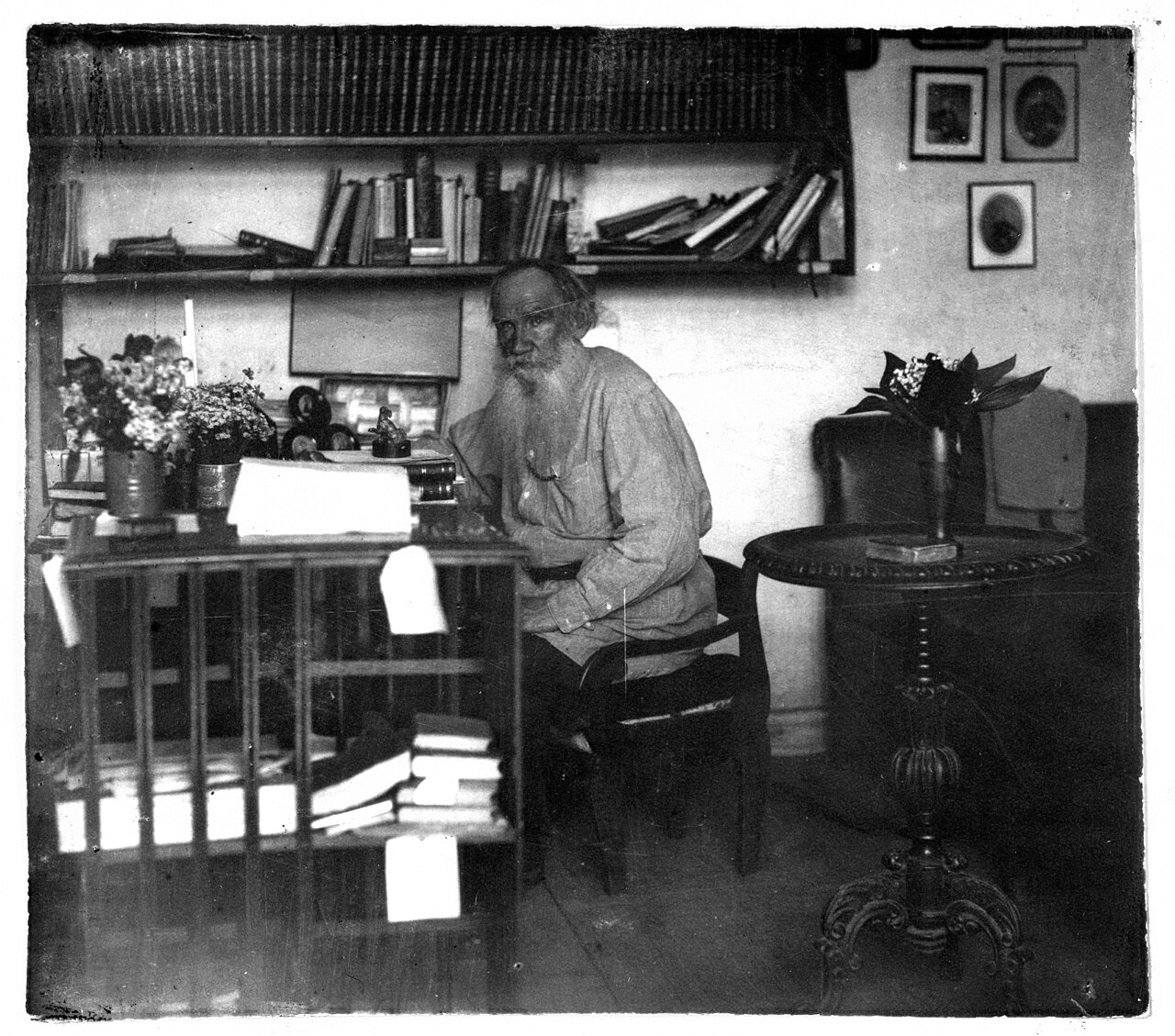
Tolstoy spent his final decades writing essays, religious works, stories, letters, and moral arguments that reached audiences far beyond Russia. He became an international figure whose opinions were sought by pacifists, religious reformers, anarchists, and social critics. He rejected the idea that political power was the primary means of improving society. Instead, he placed responsibility on individual conscience and moral transformation. In 1910, Tolstoy left Yasnaya Polyana during a personal crisis, accompanied by his daughter Aleksandra and his physician. He became ill while travelling and died on 20 November 1910 at the railway station of Astapovo. His death attracted enormous public attention, reflecting the extraordinary position he had come to occupy in Russian and international culture.
Quote
The Anarchists are right in everything; in the negation of the existing order and in the assertion that, without Authority there could not be worse violence than that of Authority under existing conditions. They are mistaken only in thinking that anarchy can be instituted by a violent revolution. But it will be instituted only by there being more and more people who do not require the protection of governmental power and by there being more and more people who will be ashamed of applying this power.
Archive
Gallery