Basket Empty
Compendium
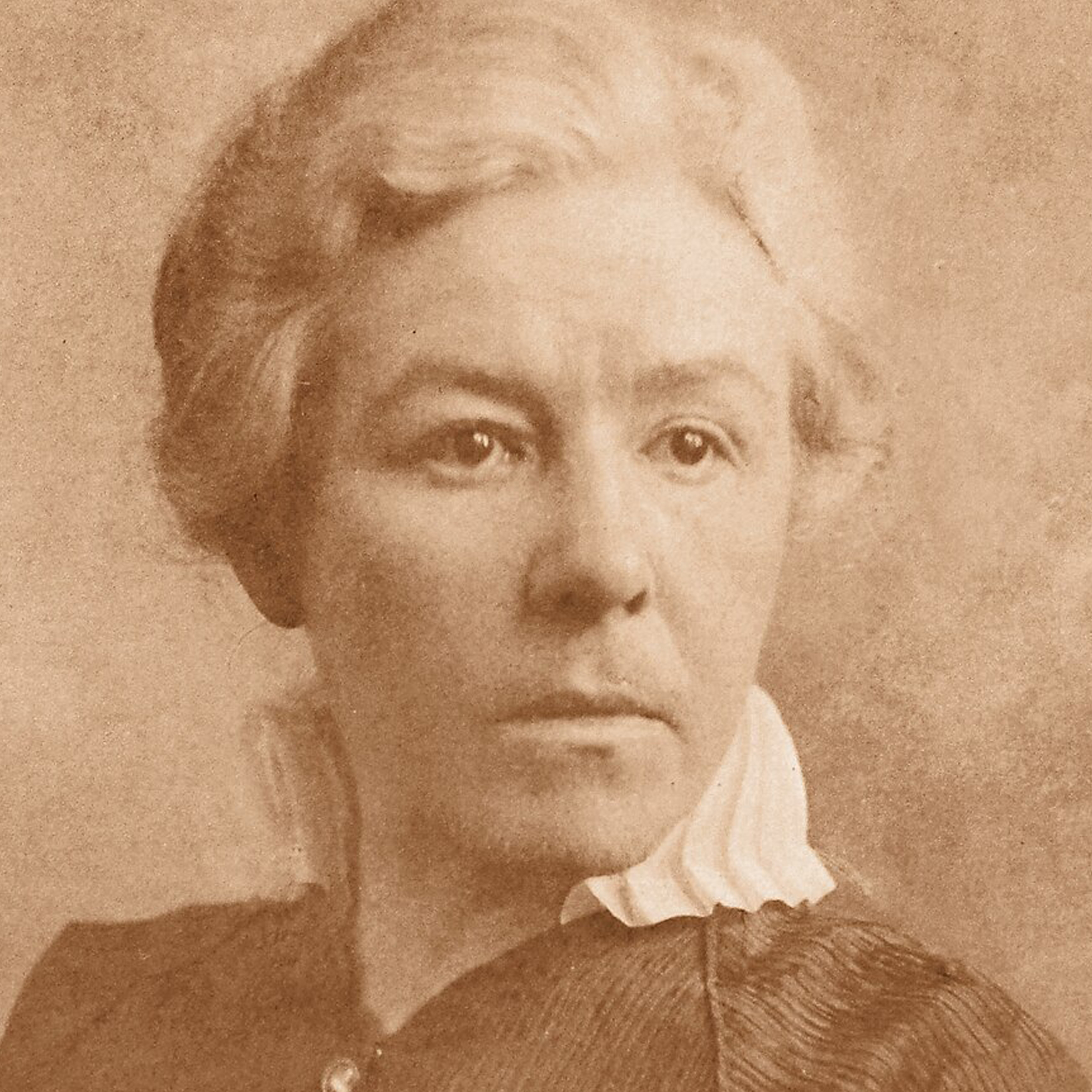
Maria Isidorovna Goldsmith (Мария Исидоровна Гольдсмит)
- Known for
- Theorist
- Born
- Died
Biography
Russian-born biologist whose life combined scientific research with a sustained commitment to anarchism. Although she became an accomplished scientist associated with the Sorbonne and the evolutionary biologist Yves Delage, her political activities were equally important. Goldsmith emerged from the experience of Tsarist repression, became involved in the anarchist movement in Paris during the 1890s, wrote extensively for the international anarchist press, advocated anarchist communism and revolutionary syndicalism, and participated in some of the major theoretical controversies within anarchism during the early twentieth century. Her political outlook was rooted above all in opposition to state coercion and in a conviction that human freedom depended upon solidarity and the autonomous organisation of workers.
Goldsmith's anarchism can be traced partly to her childhood. Born in Saint Petersburg in 1871, she grew up in a politically radical family. Her parents, Isidor and Sophie Goldsmith, were involved with the Russian revolutionary movement and associated with the Narodnik tradition. Isidor's political activities brought him into conflict with the Tsarist authorities, and the family experienced exile and political repression. As a child, Marie therefore witnessed the practical consequences of state power: surveillance, restrictions on movement, poverty, and arbitrary imprisonment. Her father's writings about exile described a system in which police supervision was routine and officials possessed sweeping powers over political prisoners. The biography suggests that these experiences contributed to Goldsmith's later hostility towards the state.
The family's intellectual environment also exposed her to radical political and scientific ideas. Her father worked in publishing, producing journals devoted to materialism, science, and socialism, while her mother was a highly educated scientist who had studied medicine and botany. The Goldsmith household was connected to important figures in Russian revolutionary thought, including Peter Lavrov and the wider intellectual milieu influenced by Mikhail Bakunin. Marie inherited from her parents both a commitment to intellectual inquiry and an understanding of political opposition as a serious practical activity. When the family eventually settled in Paris, she entered a large community of Russian political émigrés, providing the environment in which her own anarchist politics developed.
Goldsmith initially participated in socialist rather than explicitly anarchist politics. In 1891 she joined the Étudiants Socialistes Révolutionnaires Internationalistes, or ESRI, a student organisation containing a range of revolutionary socialist tendencies. During the 1890s, however, Goldsmith moved decisively towards anarchism. The precise moment of her conversion is uncertain. One account associates it with lectures by the anarchist Saul Yanovsky, while another emphasises her meeting with Peter Kropotkin in 1896. Her family's connections with the Bakunin tradition may also have influenced her. By 1897, Goldsmith and her colleague Léon Rémy had helped move the ESRI towards an explicitly anarchist position, particularly in opposition to electoral politics.
For Goldsmith, anarchism meant considerably more than opposition to government. It was a theory of human emancipation based upon freedom, equality, cooperation, and workers' self-activity. Her early political writing addressed subjects including women, anarchist communism, antisemitism, and Zionism, although she increasingly concentrated on economic questions and the organisation of the anarchist movement. She became an important contributor to the anarchist press, writing for publications such as Jean Grave's Les Temps Nouveaux and later Plus Loin. She also contributed to the Yiddish anarchist press, including Fraye Arbeter Shtime. Her use of pseudonyms, particularly Maria Korn and Isidine, allowed her to maintain some separation between her scientific career and her political activities.
Her Paris home became an important centre of anarchist activity. At 2 rue Marie-Rose, where she lived with her mother, Russian anarchist émigrés could meet, debate, and organise. The house was part of a wider network linking Russian, French, and Jewish anarchist communities. Goldsmith maintained particularly strong connections with Jewish anarchists, regularly attending their meetings and contributing to their publications even though she did not speak Yiddish herself. This demonstrated the international character of her anarchism: political solidarity was not confined by nationality, language, or established political institutions.
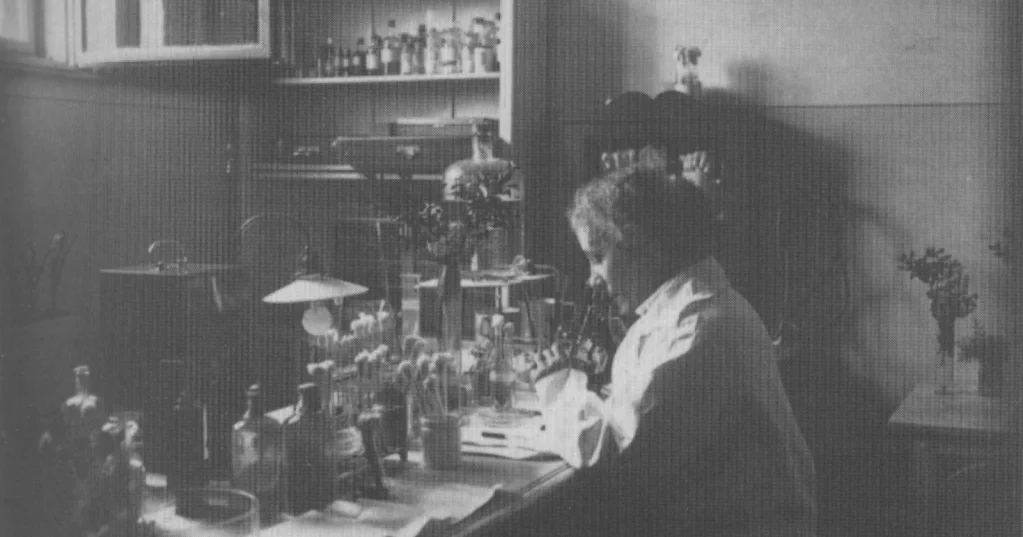
Goldsmith's scientific work also intersected with her political philosophy. As a biologist and collaborator of Yves Delage, she became an accomplished evolutionary scientist, producing important work on evolution, heredity, and animal psychology. She was influenced by Darwinism and Lamarckism and, like Kropotkin, rejected interpretations of evolution that reduced society to a struggle of ruthless individual competition. Instead, she emphasised cooperation and social solidarity. For Goldsmith, scientific understanding could reinforce rather than contradict anarchism: biology demonstrated the importance of cooperation, while anarchism sought to construct a society in which cooperation could develop freely rather than being imposed through authority.
Economically, Goldsmith became an advocate of anarchist communism and revolutionary syndicalism. She regarded the general strike and workers' collective action as crucial instruments of revolutionary transformation. In her 1920 work Revolutionary Syndicalism and Anarchism, she argued that syndicalism's practical methods were fundamentally compatible with anarchist theory. Her position was that workers should liberate themselves through their own collective organisation rather than depend upon political parties or state institutions. Similarly, in her 1906 essay “On Organisation,” she connected communism directly to anarchism: genuine human development required justice, sympathy, and solidarity, and these could not flourish under social oppression. Communism, in this sense, was not an alternative to anarchism but its economic consequence.
Goldsmith's anarchism was nevertheless independent and sometimes controversial. During the First World War, she supported Kropotkin's defence of the Entente against the Central Powers, although she did not personally sign the Manifesto of the Sixteen. This placed her in conflict with many anarchists, including prominent internationalists who regarded participation in the war as incompatible with anarchism. Goldsmith maintained that resisting aggression and political oppression could, in exceptional circumstances, take precedence over absolute anti-militarism. Her willingness to defend this unpopular position illustrates that her anarchism was based on principles she interpreted independently rather than on unquestioning loyalty to the movement.
She demonstrated the same independence during the debate over anarchist organisation in the 1920s. Goldsmith opposed the organisational Platform developed by Nestor Makhno and Peter Arshinov, arguing that excessive centralisation and binding organisational discipline risked reproducing the authoritarian structures anarchism sought to abolish. She favoured freedom of action for individuals and local groups and resisted the idea of a unified political line. Her disagreement with Arshinov became particularly bitter, although she maintained her personal relationship with Makhno and even helped him with his memoirs. For Goldsmith, the means of organisation had to remain consistent with the ends of freedom: an emancipatory movement could not achieve liberation by becoming authoritarian itself.
Goldsmith died in Paris in January 1933, two days after the death of her mother, to whom she had devoted much of her life. Her death was mourned by anarchists internationally. Makhno described her as one of the major figures of anarchism, while other anarchists, including Emma Goldman and Alexander Berkman, expressed their grief. Despite this recognition, Goldsmith subsequently became a relatively neglected figure. Her scientific contributions survived in academic literature, while much of her anarchist writing remained obscure.
Archive
Gallery