Basket Empty
Compendium
Michael Schwab
- Known for
- Haymarket Martyr
- Born
- Died
Biography
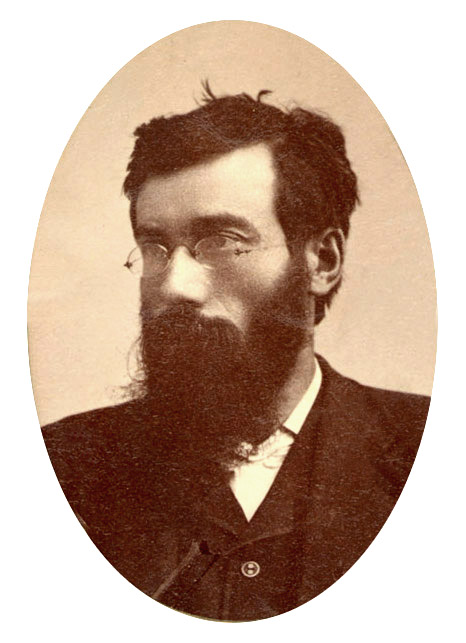
Michael Schwab (1853–1898) was a German-American anarchist, labour activist, journalist, and one of the men convicted in connection with the Haymarket affair of 1886. Born on August 9, 1853, in Kitzingen, Bavaria, Schwab grew up in a modest family during a period of major political, economic, and social change in Germany. His autobiography, written while imprisoned following the Haymarket affair, describes the experiences that shaped his political beliefs and eventual commitment to socialism and anarchism.
Schwab remembered his childhood as generally happy. His mother came from a relatively prosperous peasant family and was remembered by him as kind and opposed to vulgarity. She died when he was eight years old. His father, a small tradesman whom Schwab described as kind and loving, died in 1865. The deaths of his parents left Schwab and his sister without their immediate family home. Their property was sold, and the children were placed under the guardianship of an uncle.
Religion initially played an important role in Schwab's life. Raised Catholic, he was taught to accept the teachings of the Church and spent considerable time praying and practicing his faith. However, his confidence in Christianity began to weaken during adolescence. He became increasingly sceptical of the behaviour of Catholic priests, particularly after witnessing what he regarded as hypocrisy between their public religious teachings and private conduct. An experience during a religious pilgrimage particularly affected him and convinced him that some religious authorities did not genuinely believe the doctrines they preached.
His intellectual development accelerated through his reading. As a teenager, Schwab discovered the works of Friedrich Schiller and Johann Wolfgang von Goethe, despite the fact that some of their writings were discouraged by his teachers and priests. Their ideas opened what he described as a new intellectual world. His studies in literature, history, geography, Latin, and Greek also exposed him to classical accounts of resistance to tyranny. These influences contributed to his growing rejection of religious authority and political absolutism.
Economic circumstances eventually forced Schwab to leave school and learn a trade. On August 5, 1869, he became an apprentice bookbinder in Würzburg. The working conditions were harsh. Apprentices could work extremely long hours, including much of Sunday, for little reward. Schwab's employer was a struggling craftsman whose business was threatened by economic conditions and competition from larger enterprises. Schwab came to see his employer's difficulties as an example of the pressures placed on workers and small producers by the emerging capitalist economy.
Despite the demanding work, Schwab remained devoted to books. He described spending his evenings reading until late at night. His intellectual interests gradually expanded from literature to politics and economics. He became involved in the socialist movement and was influenced by the ideas of Ferdinand Lassalle and the growing German workers' movement.
By the 1870s, Schwab was actively promoting socialism. In 1875, he left Switzerland and travelled through Germany on foot, carrying socialist pamphlets and literature. He used his journeys as opportunities to discuss socialism with workers, peasants, and other travellers. He viewed political education as an important form of activism and believed that ordinary people could be persuaded to question the social and economic system around them.
Schwab eventually emigrated to the United States. After arriving in New York, he travelled to Chicago, where he began another period of self-education. He worked to master English and studied American history, geography, and labour conditions. His experiences in the United States did not convince him that American capitalism offered workers substantially greater freedom or security than European society. Instead, he observed poverty, low wages, exploitation, and unequal economic power.
After spending time in Chicago, Schwab moved to Milwaukee and joined the Socialist Labor Party. He continued working as a bookbinder while becoming increasingly involved in political and labour organisations. His experiences among working people strengthened his conviction that poverty and exploitation were not simply individual misfortunes but consequences of a broader economic system.
Schwab's political views eventually developed from socialism toward anarchism. He believed that capitalism concentrated control of land and the means of production in the hands of a minority, leaving the majority vulnerable to poverty and exploitation. In his autobiography, he described witnessing hunger, unemployment, prostitution, crime, corruption, and the suffering of working families. These observations convinced him that fundamental changes to society were necessary. He came to reject both capitalism and the authority of the state, identifying himself as an anarchist.
In Chicago, Schwab became associated with the city's German-speaking radical labour movement. He was connected with the socialist and anarchist circles surrounding the newspaper Arbeiter-Zeitung and its editor August Spies. These groups advocated workers' organisation, political education, and resistance to what they regarded as the exploitation of labour. Schwab participated in meetings and organising activities and became a recognisable figure within Chicago's radical community.
The events that transformed Schwab's life occurred in May 1886 during the nationwide struggle for the eight-hour working day. On May 4, a meeting was organised at Haymarket Square in Chicago to protest police violence against striking workers at the McCormick Reaper Works. Schwab attended the meeting. Shortly after the gathering began, police advanced on the crowd, and a bomb was thrown into their ranks. Gunfire followed, leaving both police officers and civilians dead or wounded.
Schwab was arrested soon afterward along with several other prominent anarchists. Although he was not accused of throwing the bomb, he was prosecuted as part of a broader case against Chicago's radical labour movement. The trial became one of the most controversial political trials in American history. Schwab and the other defendants were portrayed by authorities and much of the press as dangerous anarchist conspirators.
Schwab was convicted and sentenced to death. His sentence was later commuted to imprisonment, and he remained in prison while writing his autobiography. Throughout his account, he defended his beliefs and attempted to explain how his experiences with religion, labour, poverty, capitalism, and political repression had led him to anarchism.
Schwab married on June 7, 1884, and was the father of two children. Despite the turmoil surrounding his political life and imprisonment, he described his marriage as a happy one. He remained imprisoned for several years before his eventual release. Schwab had intestinal and pulmonary issues during his last years, for which he was hospitalised at the Alexian Brothers' Hospital in Chicago in November 1897. He remained there for the last seven months of his life, undergoing an operation in the middle of May 1898. Schwab died from his chronic internal ailment on June 29, 1898. The Social Turnverein of Chicago arranged his funeral and announced plans for his immediate cremation. He was cremated on July 6 and his widow received his ashes.
Quote
There were no secrets. We prophesied in word and writing the coming of a great revolution, a change in the system of production in all industrial countries of the globe. And the change will come, and must come.
Archive
Gallery