Basket Empty
Compendium
Sante Caserio
- Known for
- Assassin
- Born
- Died
Biography
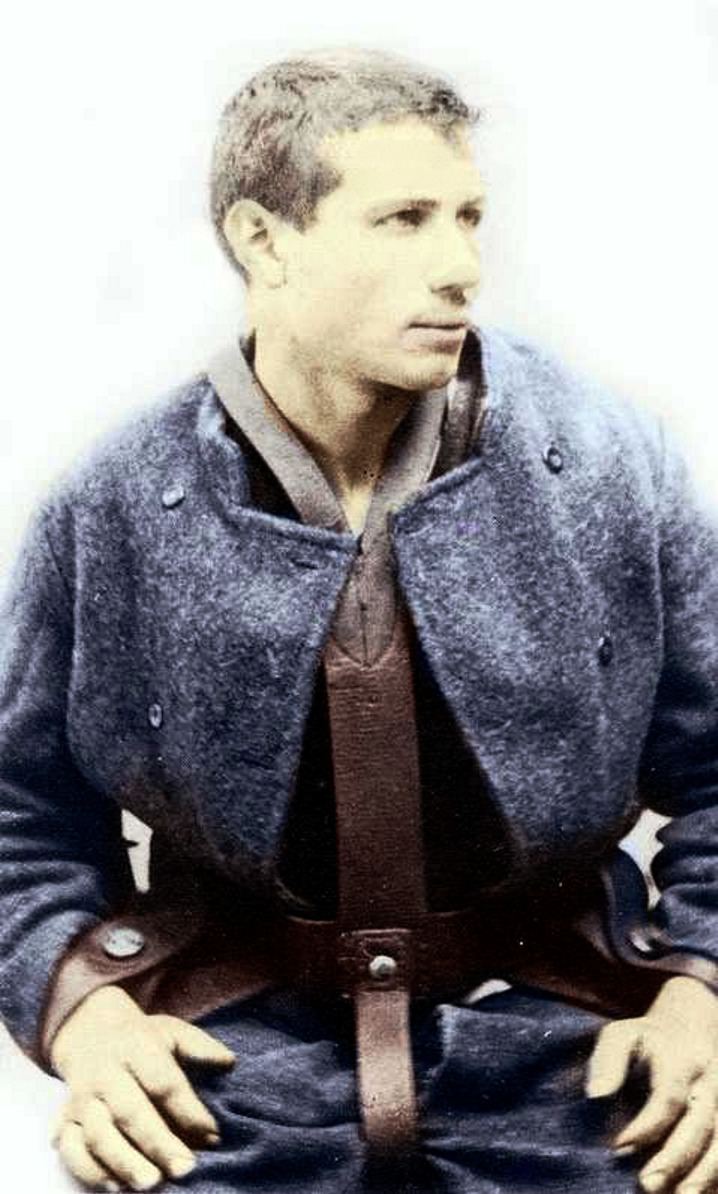
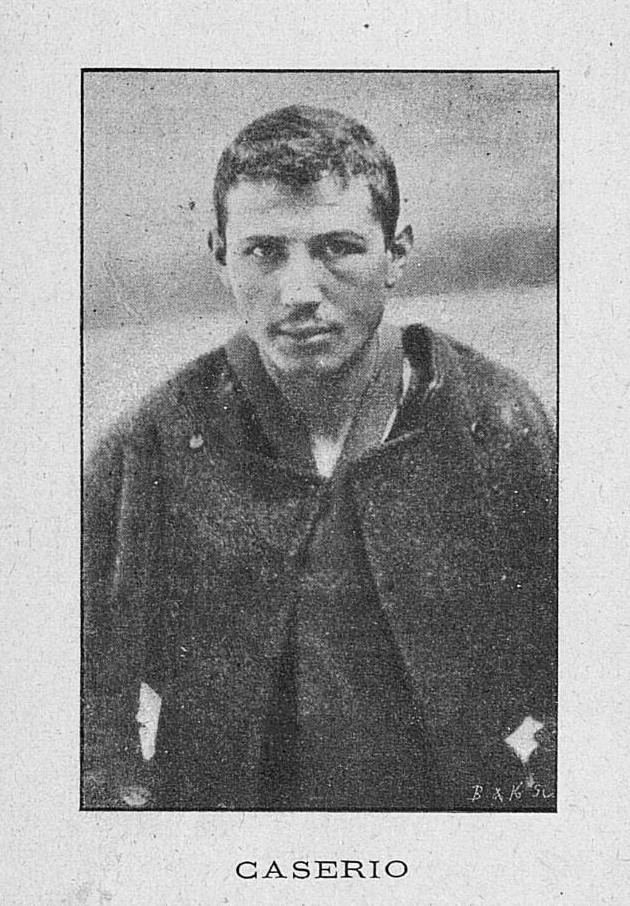
Italian anarchist who in 1894 stabbed the President of the French Republic Marie-François Sadi Carnot to death. Never regretted the gesture, he was sentenced to death by guillotine.
Sante Geronimo Caserio was the penultimate of a family of six children. His father was a boatman. First an apprentice shoemaker in his village, the young Sante, not wanting to be at the expense of his mother, then worked at a baker’s house in Milan. He became an anarchist around the age of eighteen, at the time of the trial of Rome against nearly 200 companions arrested after the demonstrations of May 1, 1891. He then organised in Milan a group that distributed bread and propaganda to the unemployed.
Accused of having distributed anti-militarist leaflets at the gate of the barracks, he was arrested on April 26, 1892 and at the trial was sentenced to 12 months in prison, reduced to 8 months on appeal. Left provisionally released, he left Milan around the spring of 1893 to escape incarceration and military service. He won Switzerland and stayed for three months in Lugano; he may also have resided for some time in La Chaux-de-Fonds. Then he passed to France and, on July 21, 1893, he arrived in Lyon where he frequented the anarchist Sanlaville and worked for a time as a door.
From Lyon he went to Vienna (Isère) where he had found a job as a baker’s worker, then to Ce (auj. Sète, Hérault), where he hired himself at the Viala bakery and was filed by the police as a “quite militant anarchist” but considered “not dangerous” by the Prefect of Hérault. In Sète he attended Café du Gard, a meeting place for local anarchists, was in contact with Saurel, one of the best-known activists in the locality, and received many periodicals including Le Père Peinard, La Révolte and L’Insurgé published in Lyon.
It was in Sète that the idea of accomplishing “a great feat” and avenging Ravachol and Auguste Vaillant, who had been guillotined respectively on 11 July 1892 and 3 February 1894, was guillotined. Having learned of the President of the Republic's next visit to Lyon, he abruptly decided that the latter would be the victim and took all steps to carry out his project. On June 23, 1894, in the morning, he bought a dagger from a gunsmith from Sète, and in the afternoon gained Montpellier. From there, by rail, he went to Vienna and it was on foot that he arrived in Lyon on June 24 in the evening.
On June 28, 1894, in Lyon, during an official visit on the occasion of the Universal Exhibition, Sadi Carnot, President of the Republic, was beaten to death by the young anarchist. Bearing his dagger, the assassin exclaimed: “Long live the Revolution! Then “Long live the Anarchy! "before being arrested. The next day, the widow of Sadi Carnot received a photograph of Ravachol, sent by Caserio with these simple words: “He is well avenged."
On 3 August, Caserio appeared before the Rhône Assize Court and, after a trial that lasted a dozen hours and a deliberation of a few minutes, he was sentenced to death. To his judges, Caserio claimed to have acted on his own initiative and, taking up his public defender, declared: “Well, if governments employ against us rifles, chains, prisons, do we, the anarchists, who defend our lives, remain locked up in our home? No, you who are the representatives of bourgeois society, if you want my head, take it! He accepted his condemnation to the cry of “Long live the social revolution.” To his mother he wrote: “Oh my dear mother, don’t think badly of me! But think that if I committed this act, it’s not that I became a criminal... If I committed this act, it was because I was tired of seeing the world so infamous.”
Quote
... if the government uses rifles, chains, prisons against us, should we, the Anarchists, we who defend our lives, remain locked in the house? No. No. On the contrary, we respond to the government with dynamite, bombs, knives, daggers. In a word, we must do what is possible to destroy the bourgeoisie and the governments. Lords of the Jury, you are the representatives of bourgeois society. If you want my head, take it; but do not believe that in this way you will stop the anarchist movement. ...
Archive
Gallery